
From Scanned Archives to Searchable Digital Assets: A Practical Roadmap for Content Digitization and Data Enrichment
A practical seven-step roadmap for turning scanned archives into searchable digital assets with OCR, metadata, data enrichment and quality checks.
In this article
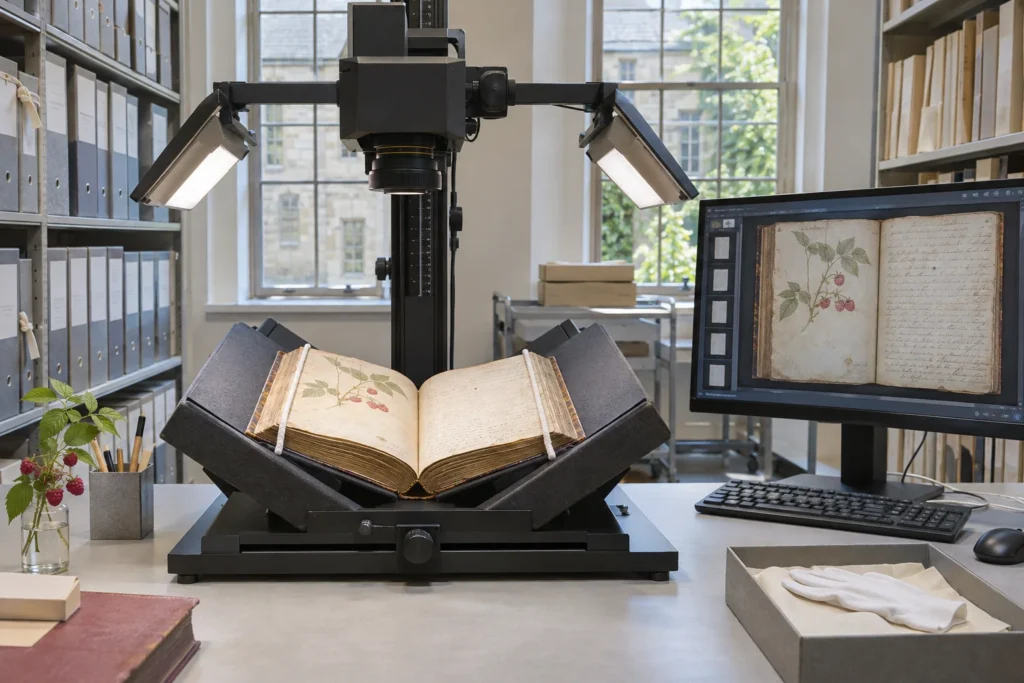
Content digitization helps publishers, professional associations, libraries and enterprises make valuable archives easier to find and use. These collections often include print books, journals, reports, microfilm, PDFs and image-based documents. The content may still be relevant, but it becomes difficult to use when it cannot be searched, linked or delivered in the formats readers expect.
Scanning is an important first step, but a collection of scanned PDFs remains a collection of images unless the organisation can identify, search and manage what each item contains.
Content digitization requires a disciplined combination of scanning, OCR technology, metadata and data enrichment. It makes valuable information easier to find and reuse.
The difference between scanning and digital transformation
Scanning creates a digital image of a physical page. It creates a copy of the visible page and makes distribution easier. However, a scanned image alone does not tell a platform what the article title is, who wrote it, which issue it belongs to, what subjects it covers or where a reader can find related material.
Content digitization turns the page into a useful digital object. A digital object combines several layers:
- A high-quality master image or preservation file.
- A delivery format such as PDF, HTML or EPUB.
- Machine-readable text created through OCR or accurate transcription.
- Descriptive and structural metadata.
- Rights, provenance and version information.
- Links to related content, authors, topics, identifiers and products.
Users expect to search a site, find content through search engines and AI tools, move between related articles and use material on different devices. An image-only archive cannot meet those expectations reliably.
Why data enrichment matters now
Page counts measure production volume, but they do not show whether content can be found, understood and reused. Data enrichment improves a digital file by adding or correcting information that helps people and systems work with it.
For a publisher, enrichment may include author names, affiliations, publication dates, chapter titles, keywords, abstracts, subject classifications, digital object identifiers, image captions, product information and usage rights. For a corporate archive, it may include document type, department, region, project, customer, retention category and confidentiality level.
This information enables search filters, content recommendations, workflows and analytics. It can support mobile reading, APIs and AI-assisted search. Accessibility also requires suitable document structure, reading order, alternative text and testing; OCR and metadata alone are not enough.
In its guidance for U.S. federal records, the National Archives and Records Administration explains how metadata supports the management, access, preservation and retrieval of digitized records. That principle applies equally to commercial publishing: without reliable metadata, even well-scanned content remains hard to discover and difficult to scale.
A practical roadmap for content digitization projects
Large archives can feel overwhelming, especially when content includes multiple formats and inconsistent historical records. A phased approach reduces risk and helps teams demonstrate value early.
1. Define the business purpose before selecting technology
The first question is not “Which scanner should we buy?” It is “What should this content enable?” Possible goals include launching a paid archive, improving internal research, supporting a new learning product, meeting accessibility requirements, preserving fragile material or reducing manual document-handling work.
The goal determines the quality level, metadata fields, formats, workflow and quality checks. A collection intended for long-term preservation needs a durable master file and fixity checks. A collection intended for a public website needs strong search, clear rights information and accessible delivery. A project supporting data extraction may need carefully structured fields and human validation.
2. Inventory and prioritise the collection
For digital archive management, create an inventory covering format, condition, estimated page count, language, rights status, existing metadata and likely demand. Use it to choose a practical first batch instead of attempting the entire archive at once.
Prioritisation should balance value and feasibility. A publisher might begin with high-demand backlist titles, frequently requested journal issues or content that supports a new product. An organisation with fragile or deteriorating records may prioritise preservation risk. A pilot batch should be large enough to test the complete workflow but small enough to improve quickly.
3. Capture content at the right quality level
Image quality affects every downstream stage of content digitization. Establish requirements for resolution, colour, file format, page orientation, cropping, de-skewing and naming conventions before production starts. Keep a high-quality master separate from web and mobile derivatives, and check for missing pages, poor cropping, blur and incorrect order.
4. Use OCR carefully and measure its quality
Optical character recognition converts the words visible in an image into machine-readable text. This makes documents searchable and can provide a starting point for structured extraction. The U.S. National Archives explains that OCR creates a machine-readable text layer that makes digitized documents searchable, but it also cautions against OCR processes that alter or replace the original image.
OCR accuracy depends on scan quality, font, page layout, language, paper condition and the presence of handwriting, tables or mathematical notation. Do not assume every OCR output is ready for publication. Define acceptable accuracy levels according to the use case. A search-only archive can often tolerate some recognition errors; legal, medical, financial or scholarly content may require far more validation.
For complex content, a hybrid approach can be useful: automated OCR handles scale, while trained reviewers check high-value pages, headings, tables, equations, names and identifiers. This focuses human effort where errors would cause the greatest harm.
5. Design a metadata model that supports the user journey
Metadata enrichment should not be treated as a final administrative task. It should be designed around how people will find and use the content. Start with a small, consistent core: title, creator, date, document type, language, rights, persistent identifier and source. Add fields that serve the particular audience, such as subject, audience level, product code, journal issue, location or entity name.
Consistency matters more than having hundreds of fields. Controlled vocabularies, authority files and validation rules reduce duplicates and spelling variations. For example, “United Kingdom,” “UK” and “U.K.” should not create three different filters. Where relevant, common standards such as Dublin Core, MARC, JATS, ONIX or METS can make content easier to exchange with libraries, platforms and partners.
6. Enrich content using automation with human oversight
AI and rules-based tools can identify entities, classify topics, extract dates, recognise names and suggest keywords. This may reduce manual work for large backfiles, depending on source quality and validation needs. But automated enrichment should be reviewed against a trusted sample and used with clear confidence thresholds.
A practical workflow does not ask an AI system to make every final decision. It allows automation to suggest, classify and flag exceptions, while people verify ambiguous or high-impact records. Keep a record of the source of each enriched field and allow corrections to flow back into the system. That creates a data asset that improves over time instead of becoming another unmaintainable repository.
7. Publish, preserve and measure use
The final output of content digitization should match the business purpose. This may include accessible HTML, tagged PDF, EPUB, XML, an online platform or an API. Search results should lead users to useful context, not isolated files.
Preservation is also an ongoing responsibility. Digital Preservation Coalition guidance stresses that digital preservation consists of managed activities that maintain access over time. Store master files securely, monitor file integrity with checksums, document migrations and retain the metadata needed to understand the file in the future.
After launch, measure searches, downloads, failed searches, time spent, frequently accessed topics and correction rates. These signals reveal which areas need better metadata, better document indexing or improved user interfaces.
Common mistakes to avoid
Common problems include selecting technology before defining a use case, neglecting rights information, using OCR without quality checks, keeping metadata in disconnected spreadsheets and failing to preserve original files. A pilot can prove the workflow, expose hidden content issues and create a repeatable model before expansion.
What this means for publishers and content organisations
Content digitization and data enrichment are no longer back-office activities. They are a way to extend the life and reach of trusted content. A well-structured archive supports discovery, accessibility, localisation, licensing, analytics and new digital products. It can also reduce the cost of locating and repurposing information across editorial, production and customer-service teams.
For service partners, the strongest offering combines production expertise with technology: capture and OCR, metadata design, validation, content conversion, accessibility, secure delivery and ongoing data quality management. The objective is not merely to create more files. It is to create content that people and systems can reliably find, understand and use.
Final takeaway
Every archive contains potential value, but that value is hidden when content sits in unsearchable pages and disconnected files. By combining careful content digitization with OCR, metadata and enrichment, publishers and organisations can turn static archives into durable digital assets.
The right starting point is a focused, measurable pilot. Once teams can show that content is easier to find, safer to manage and more useful to readers, scaling the programme becomes a business decision rather than a preservation burden.